
What Is a Home Energy Audit and Is It Worth It?
A home energy audit finds where your Lexington house is wasting heating and cooling dollars. Here is what auditors check, what it costs, and whether the savings justify the fee.
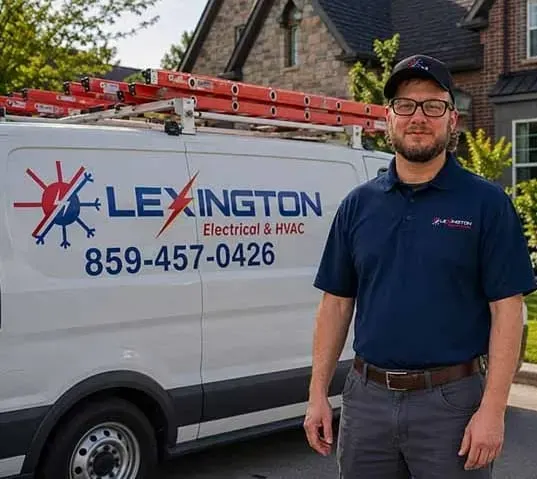
A home energy audit is a room-by-room diagnostic that identifies exactly where your Lexington house is leaking conditioned air, running an oversized or undersized HVAC system, or wasting electricity on inefficient equipment. The result is a prioritized list of improvements, and in Central Kentucky, where summer cooling and winter heating costs both run high, those improvements can pay back quickly.
If your HVAC system is part of the problem, our HVAC maintenance and tune-up services are a natural follow-up to any audit finding.
What an auditor actually tests
Professional auditors use diagnostic equipment, not guesswork. The two most useful tools are the blower door test and the thermal imaging camera.
The blower door depressurizes your home and measures total air leakage in cubic feet per minute. The infrared camera shows temperature differences across walls, ceilings, and floors, revealing missing insulation, air bypasses, and even duct leaks hidden inside walls. Visual inspection alone misses the majority of these problems.
- Blower door test, measures total air infiltration and leakage rate
- Thermal imaging scan, finds insulation voids and hidden air leaks
- Duct leakage test, quantifies how much conditioned air never reaches living space
- HVAC system review, checks efficiency, sizing, and airflow
- Combustion appliance safety check, carbon monoxide and backdrafting risks
- Lighting and appliance inventory, identifies easy electrical savings
The biggest energy losers in Lexington homes
Central Kentucky homes have a few consistent problem areas. Older neighborhoods in Lexington, Chevy Chase, Kenwick, the Southland subdivisions, often have little or no attic air sealing above interior wall plates. That gap lets conditioned air pour into the attic year-round. Post-1990 homes in Nicholasville and Georgetown are tighter but sometimes have duct systems that leak 20% or more of the air before it reaches the registers.
Attic insulation depth is another common finding. Code-minimum insulation from 15 years ago is R-30 or R-38 in many homes. Current recommendations for Kentucky climate zone 4 are R-49 to R-60. Upgrading pays back through reduced HVAC runtime.
Blower door results: what the numbers mean
Blower door results are reported in Air Changes per Hour at 50 Pascals of pressure (ACH50). Older Lexington homes often test at 10 to 15 ACH50, meaning the entire air volume of the house is replaced 10 to 15 times per hour when the envelope is pressurized. Well-sealed newer construction targets 3 ACH50 or lower. The gap between those numbers represents heating and cooling dollars going directly out through the walls, floor, and ceiling.
The auditor's report will tell you which locations account for the most leakage, so you can prioritize attic air sealing, rim joist sealing, or window and door improvements in order of impact.
HVAC findings: sizing and duct leakage
Energy audits frequently uncover HVAC systems that were oversized when installed. Oversized equipment short-cycles, it cools or heats the house quickly, shuts off, and then cycles on again too soon. Short-cycling reduces efficiency, increases wear, and leaves humidity problems in Lexington summers because the system never runs long enough to dehumidify the air.
If your audit flags HVAC performance issues, our team can follow up with a full system evaluation. Visit our AC repair page or contact us to schedule a diagnostic visit.
Electrical findings from an energy audit
Energy auditors also review your lighting, major appliances, and sometimes your electrical panel. Common findings include incandescent or older CFL lighting that could be replaced with LEDs, phantom loads from devices in standby mode, and electric water heaters that could be replaced with heat pump water heaters for significant savings.
If the auditor identifies panel capacity issues or wiring that needs attention, our licensed electricians handle electrical panel upgrades across Lexington and Central Kentucky.
Utility programs and rebates in Kentucky
Kentucky utilities and federal programs sometimes offset audit and improvement costs. LG&E and KU periodically offer rebates for insulation upgrades, smart thermostats, and high-efficiency HVAC equipment. The federal Inflation Reduction Act created rebate programs for income-qualified households that cover a portion of weatherization work. Check with your utility provider and confirm current eligibility before scheduling improvements.
The federal 25C Energy Efficient Home Improvement Credit covers a percentage of qualifying insulation and air sealing costs, up to the annual cap. Keep your receipts and the contractor's documentation for your tax preparer.
DIY audit steps you can take today
Before scheduling a professional audit, a DIY walk-through helps you understand what you are dealing with and gives you better questions to ask.
- On a windy day, hold a lit incense stick near window frames, electrical outlets on exterior walls, and where the floor meets the wall, visible smoke drift reveals leaks
- Check attic hatch weather stripping, attic hatches are one of the leakiest spots in older Lexington homes
- Look for damp spots or staining on attic insulation, which indicate bypasses where warm air is escaping
- Pull your LG&E or KU bills for the last 12 months and calculate monthly average usage, a sharp increase without lifestyle changes points to equipment degradation
- Check register airflow in every room, rooms that are hard to heat or cool often have duct issues
When to schedule a professional audit
A professional audit makes the most sense when your utility bills have increased without explanation, when you are planning a major renovation, when you are preparing to replace HVAC equipment and want to right-size the new system, or when you are buying an older Lexington home and want a full picture of what improvements to budget.
Scheduling before HVAC replacement is especially valuable. If your house leaks badly, putting in a new system without air sealing first means you are conditioning air that escapes immediately, and the contractor may still oversize the equipment to compensate. Fix the envelope first, then right-size the equipment.
Turning audit findings into action
A good audit report ranks improvements by payback period. In Lexington-area homes, attic air sealing and insulation upgrades typically rank first. Duct sealing ranks second when duct leakage is high. HVAC tune-up or replacement and smart thermostat installation round out the top tier for most homes.
Our Cool and Cozy Club maintenance membership keeps your HVAC system running at peak efficiency year-round with twice-annual tune-ups, one of the most cost-effective ways to protect the savings an audit uncovers.
Ready to get a full picture of your home's efficiency? Contact Lexington Electrical & HVAC to discuss HVAC performance, panel assessments, or any electrical findings that come out of your audit. We serve Lexington, Nicholasville, Georgetown, Winchester, Richmond, and the surrounding Central Kentucky area.
Frequently Asked Questions
- What does a home energy audit include?
- A professional home energy audit in Lexington typically includes a blower door test to measure air leakage, a thermal imaging scan to find insulation gaps, an inspection of your HVAC equipment and ductwork, a review of water heating, and an examination of windows and doors. The auditor provides a written report ranking improvements by cost and return.
- How much does a home energy audit cost in Lexington, KY?
- Some Kentucky utilities and state programs offer subsidized or free audits for qualifying homeowners. The fee is often recovered in a single heating or cooling season when you act on the top-priority recommendations.
- What is the difference between a DIY energy audit and a professional one?
- A DIY audit relies on visual inspection, you check weather stripping, feel for drafts, and review utility bills. A professional audit adds diagnostic equipment: a blower door that depressurizes the house to find every leak point, and an infrared camera that reveals hidden insulation gaps that the eye cannot see. The professional version gives you a ranked action list with real payback numbers.
- Can a home energy audit lower my electric bill in Kentucky?
- Acting on the findings of a professional audit can significantly reduce your heating and cooling costs. The largest savings in Central Kentucky typically come from air sealing attic bypasses, adding attic insulation, and ensuring your HVAC system is properly sized and maintained. The exact amount depends on your current home condition and which improvements you complete.
Schedule a home efficiency consultation in Lexington
Licensed, veteran-owned technicians serving Lexington and Central Kentucky — free estimates, no pressure.
Learn moreHave questions about your home?
Talk to a licensed Lexington technician — no pressure, just answers.