
What Electrical Work Does New Construction Need in Kentucky?
A plain-English breakdown of new construction electrical in Kentucky, service size, rough-in, inspections, smart home wiring, and what to spec before the drywall goes up.
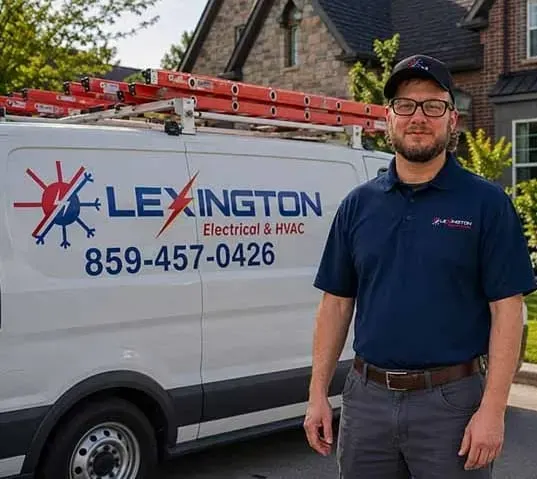
New construction gives you a blank slate for your home's electrical system, and that is both an opportunity and a responsibility. Decisions made during the framing stage lock in what your home can handle for the next 30 years. Getting the right panel size, circuit layout, and low-voltage infrastructure specified before drywall goes up saves real money and prevents frustrating retrofits later. If you are building in Lexington or the surrounding counties, here is what a licensed electrician will plan, install, and inspect.
Questions about your build? Contact our licensed electricians, we work with builders and homeowners throughout Central Kentucky.
1. Service size: start with 200 amps at minimum
Kentucky building code accepts 100-amp service for smaller homes, but no electrician working in new construction today would spec it. Modern homes run central HVAC, electric ranges, dryers, water heaters, dishwashers, and EV chargers concurrently. A 200-amp service panel is the practical starting point for any new Lexington-area home over 1,500 square feet.
Homes with two HVAC systems, an electric vehicle charger, a hot tub, or a workshop should discuss 320-amp or 400-amp service with their electrician before the foundation is poured. Upgrading the service entrance after the fact is an expensive disruption. See our electrical panel upgrade services for more on sizing.
2. Rough-in phase: wiring before drywall
Rough-in is the most critical phase of new construction electrical. After framing is complete, electricians drill through studs and joists to run Romex or conduit to every location that will need power or a low-voltage connection. This includes:
- Panel location and main service entrance conduit
- All 120V and 240V circuit runs to their respective boxes
- Dedicated circuits for kitchen appliances, laundry, HVAC, and EV charger
- Low-voltage rough-in for ethernet, coax, security, and speaker wires
- Smoke and carbon monoxide detector locations per code
- Exterior outlet and lighting boxes
3. Required circuits under Kentucky electrical code
Kentucky follows the National Electrical Code (NEC), which mandates specific dedicated circuits in new construction. Missing these at rough-in means the inspector will not sign off, and corrections after drywall are expensive.
- Refrigerator: dedicated 20-amp circuit
- Dishwasher: dedicated 20-amp circuit
- Microwave: dedicated 20-amp circuit if built-in
- Kitchen small appliances: at least two 20-amp small appliance circuits on counter space
- Laundry: dedicated 20-amp circuit for washer; 240V 30-amp for dryer
- Bathroom(s): at least one 20-amp circuit shared across bathrooms or dedicated per bath
- Garage and exterior outlets: GFCI-protected
- HVAC: dedicated circuit sized per equipment nameplate
4. Smart home and low-voltage wiring
Structuring your home for technology during rough-in costs a few hundred dollars and saves thousands later. At minimum, plan for hardwired ethernet (Cat 6 or better) to living room, bedrooms, home office, and anywhere a TV will mount. A central structured wiring panel in a utility room or closet keeps everything organized.
Common low-voltage runs worth adding during new construction in Lexington:
- Cat 6 ethernet to every room with a screen or desk
- Conduit from panel area to attic and garage for future wiring
- Prewire for ceiling speakers in living area and covered porch
- Security camera conduit to corners and entry points
- Smart doorbell prewire at front and rear entry
5. EV charger rough-in: plan now, thank yourself later
Kentucky EV adoption is rising, and running a 240V, 50-amp circuit to the garage during rough-in is straightforward. Doing the same after drywall and finished flooring are in place requires fishing wire through finished walls, often adding significant labor cost. Even if you do not own an EV today, a capped conduit and a 50-amp breaker slot reserved in the panel costs very little at this stage.
6. Smoke and CO detector placement
Kentucky code requires hardwired, interconnected smoke detectors in every sleeping room, outside each sleeping area, and on every level of the home. Carbon monoxide detectors are required on each level where fuel-burning appliances are present. All hardwired detectors need a battery backup and must be on the same interconnected circuit so when one alarm sounds, all alarms sound.
7. Rough-in inspection and what inspectors check
Before insulation goes in, the city inspector visits to verify rough-in work. In Lexington, this is coordinated through the Division of Building Inspection. Inspectors check box fill calculations, staple spacing, service entrance sizing, grounding electrode system, smoke detector locations, and that all required circuits are in place. Work that fails inspection must be corrected and re-inspected before drywall proceeds.
8. Trim-out phase: devices, fixtures, and panel final
After drywall, paint, and flooring are complete, electricians return for trim-out: installing outlets, switches, light fixtures, panel breakers, and all device covers. This is also when the utility company coordinates meter installation and energizes the service. The final electrical inspection follows trim-out and must pass before a certificate of occupancy is issued.
9. HVAC electrical coordination
New construction in Central Kentucky almost always involves coordinating electrical and HVAC rough-in simultaneously. The HVAC contractor needs dedicated circuits for the air handler, condenser, and any supplemental heat strips. Heat pump installations in new builds typically require a 240V circuit sized per the equipment data plate, plus a low-voltage thermostat wire run from air handler to thermostat location. Using a single contractor for both electrical and HVAC avoids scheduling gaps and finger-pointing on inspections. Learn about our HVAC services alongside electrical.
10. Protect your investment with a maintenance plan
New construction homeowners in Lexington often overlook post-move-in HVAC and electrical maintenance. A Cool & Cozy Club membership covers annual HVAC tune-ups and priority service so your new system stays efficient through the first full year of operation and beyond.
Ready to get started? Contact Lexington Electrical & HVAC to discuss electrical planning for your new build or home addition in Central Kentucky.
Frequently Asked Questions
- What electrical service size do I need for a new home in Kentucky?
- Most new construction homes in Kentucky require a 200-amp service panel as a minimum. Larger homes, homes with electric vehicle chargers, heat pumps, or hot tubs should spec a 400-amp service or a 200-amp main with a subpanel to avoid future upgrades.
- How many inspections does new construction electrical require in Lexington?
- Lexington new construction typically requires at least two electrical inspections: a rough-in inspection before drywall is hung, and a final inspection after all fixtures and devices are installed and service is energized. Your contractor pulls the permit and schedules both.
- What is an electrical rough-in in new construction?
- The rough-in phase is when electricians run all wiring through walls, floors, and ceilings before insulation and drywall are installed. Boxes are set, cables are pulled, and the panel is mounted and wired. No devices, outlets, or fixtures are installed yet, that comes in the trim-out phase.
- Should I add smart home wiring during new construction?
- New construction is the best time to add structured wiring for smart home systems, whole-home audio, security cameras, and EV charging. Running conduit or low-voltage cabling during rough-in costs a fraction of what retrofit wiring costs after drywall is up.
Talk to a licensed electrician about your new build
Licensed, veteran-owned technicians serving Lexington and Central Kentucky — free estimates, no pressure.
Learn moreHave questions about your home?
Talk to a licensed Lexington technician — no pressure, just answers.