
Portable Generator vs. Whole-Home Generator: Which Is the Better Fit?
Side-by-side comparison of portable and standby generators for Kentucky homes — cost, convenience, capacity, and safety.
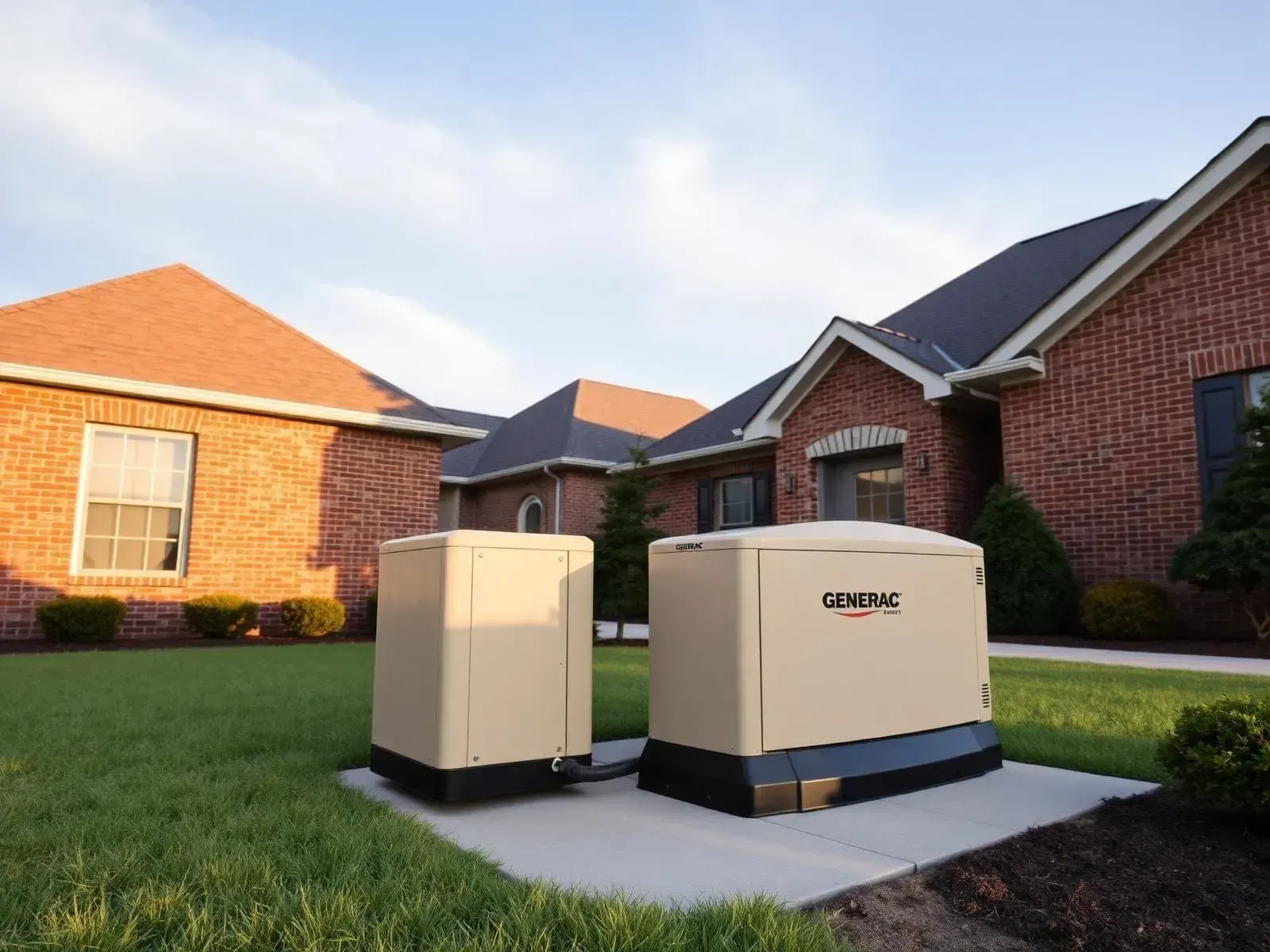
The choice between a portable and whole-home generator depends on what you need powered, how long outages typically last in your area, and whether you want automatic backup or are willing to manage a manual setup every time the power goes out. For most Central Kentucky homeowners who want HVAC and whole-home coverage during ice storms, a standby generator is the stronger choice.
Side-by-side comparison
The key differences:
- Portable: 3,000–7,500 watts, manual start, extension cords, gasoline
- Standby: 16,000–26,000+ watts, automatic start, hardwired, natural gas or propane
- Portable: $500–$2,000 purchase price
- Standby: $5,000–$15,000 installed
- Portable: powers a few essentials — lights, fridge, chargers
- Standby: powers the whole home including HVAC
Safety considerations
Portable generators produce carbon monoxide and must run outdoors, away from windows and doors. They also require a transfer switch to safely connect to your home's wiring — backfeeding without one is illegal and dangerous. Standby generators are permanently installed with proper ventilation and automatic transfer switches as part of the installation.
What to do next
If you are considering backup power for your Lexington home, request a consultation or call 859.457.0426.
Frequently Asked Questions
- Is a portable generator good enough for a power outage?
- A portable generator can power a few essentials — lights, refrigerator, phone chargers — but cannot run central HVAC, well pumps, or whole-home loads. For extended Kentucky outages, a standby generator provides automatic, whole-home backup.
- How much cheaper is a portable generator than a standby?
- A portable generator costs $500 to $2,000 while a standby system runs $5,000 to $15,000 installed. The cost difference reflects the capacity gap — portables handle 3-7 kW while standby units provide 16-26 kW or more.
- Can a portable generator damage my home's electrical system?
- Backfeeding a portable generator into your electrical panel without a proper transfer switch is illegal and extremely dangerous — it can electrocute utility workers and damage your home's wiring. Always use a transfer switch or individual extension cords.
Get a generator estimate in Lexington
Licensed, veteran-owned technicians serving Lexington and Central Kentucky — free estimates, no pressure.
Learn moreHave questions about your home?
Talk to a licensed Lexington technician — no pressure, just answers.