
What Is a Transfer Switch and Why Does Your Generator Need One?
Transfer switches explained for Lexington homeowners. Learn what they do, the difference between automatic and manual, and why Kentucky code requires one for standby generators.
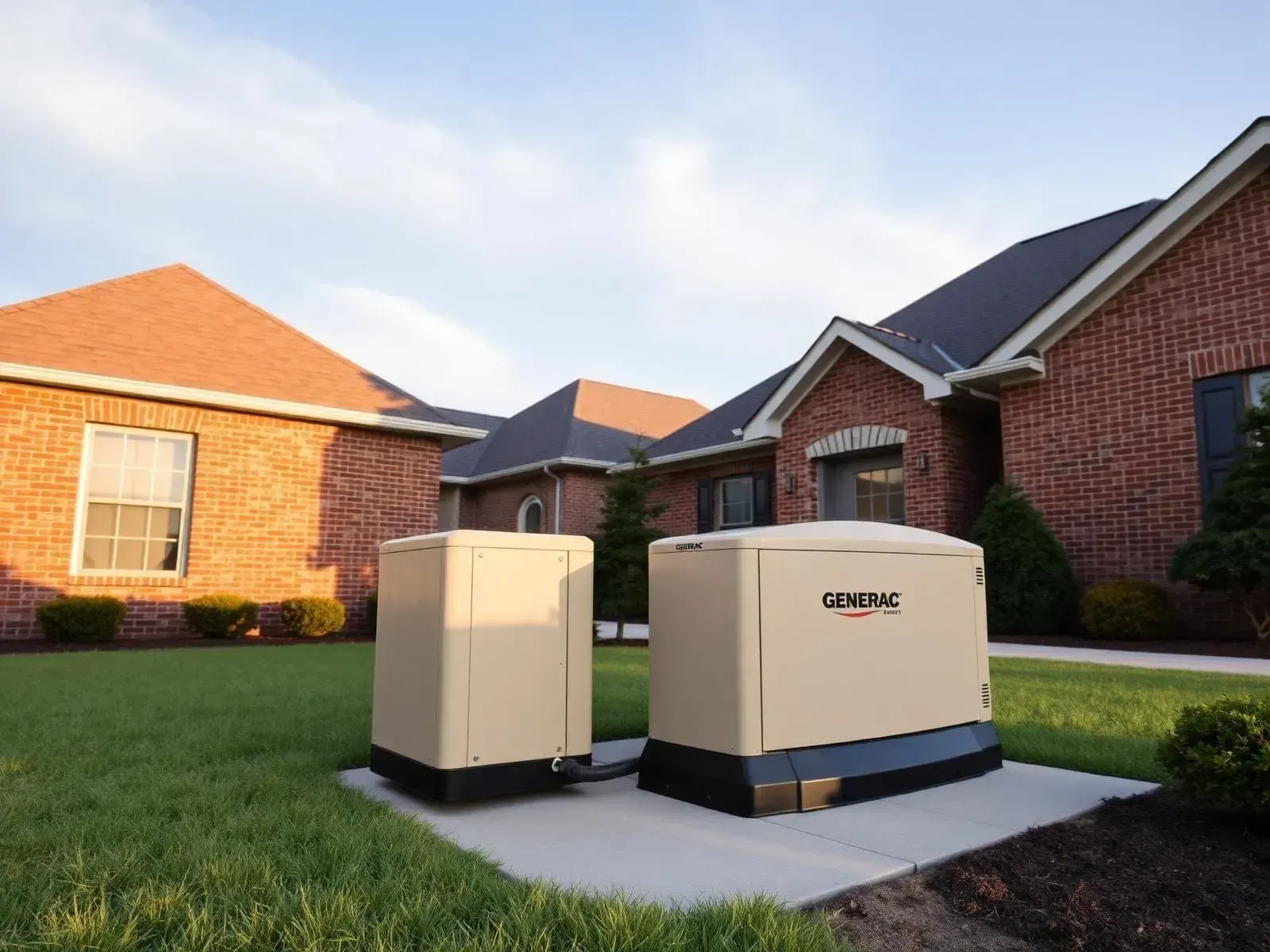
A transfer switch is an electrical device that safely disconnects your home from the utility grid and connects it to your generator. Without one, running a generator creates a direct path for electricity to flow backward into power lines, putting utility workers and neighbors at serious risk. Kentucky electrical code requires a transfer switch for every permanently installed standby generator, and Lexington inspectors verify proper installation before signing off on the permit.
How a transfer switch works
When the power goes out, a transfer switch breaks the connection between your home and the electric grid. It then creates a new, isolated connection between your home and the generator. This two-step process ensures utility power and generator power never mix. When grid power returns, the switch reverses the process and reconnects you to the utility.
The entire sequence happens in 10 to 30 seconds with an automatic transfer switch. Your whole-home generator starts, reaches stable output, and the switch transfers your load without you lifting a finger.
Automatic vs. manual transfer switches
The two main types serve different setups. Understanding the difference helps you choose the right option for your Lexington home.
- Automatic transfer switch (ATS): Detects outages instantly, starts the generator, and transfers power in seconds. Required for standby generators. No homeowner action needed.
- Manual transfer switch (MTS): Requires you to walk outside, start the generator, and flip the switch yourself. Common with portable generators. Less expensive but slower and less convenient.
- Automatic switches include exerciser functions that run the generator weekly to keep the engine and battery healthy.
- Manual switches are a good option for homeowners who want portable generator backup on a budget.
Why backfeed is dangerous
Connecting a generator to your home without a transfer switch is called backfeeding. It sends electricity out through your meter and into the neighborhood power lines. Line workers restoring power after a storm assume those lines are dead. Backfeed has caused fatalities across Kentucky and the U.S. It also violates the National Electrical Code and Kentucky law.
A transfer switch eliminates this risk completely. It is not optional equipment. It is a safety requirement.
Whole-home vs. partial-home transfer switches
A whole-home automatic transfer switch connects your entire electrical panel to the generator. Every circuit in the house gets backup power, assuming the generator is sized correctly. This is the standard for 22 kW and larger standby units.
A partial-home or load-center transfer switch covers only selected circuits, typically 10 to 16. You choose which circuits matter most: HVAC, refrigerator, well pump, lighting. This pairs well with smaller generators in the 10 to 16 kW range.
Transfer switch sizing for Lexington homes
Transfer switches are rated in amps, matching your electrical panel. Most Lexington homes have 200-amp service, so a 200-amp automatic transfer switch is the standard recommendation. Homes with 100-amp panels may need a 200-amp service upgrade before or during generator installation.
- 100-amp panel: Limits generator capacity and may require upgrade for whole-home backup
- 200-amp panel: Standard for most residential standby generators in Central Kentucky
- 400-amp panel: Found in larger homes with multiple sub-panels; requires commercial-grade transfer equipment
What installation involves in Lexington
Transfer switch installation is part of the overall generator project. A licensed electrician mounts the switch near your main panel, connects it between the utility meter and your breaker box, and wires the generator feed. The City of Lexington requires an electrical permit and inspection for this work.
Installation typically takes 4 to 6 hours as part of a full generator install. If you are adding a transfer switch to an existing generator setup, expect 3 to 5 hours of on-site work.
Brands we install
As authorized Generac and Honeywell dealers, we install transfer switches from both manufacturers. Generac's Evolution series controllers integrate the transfer switch with the generator's monitoring system, providing status alerts on your phone. Honeywell units use the same reliable platform with different branding.
Both brands carry 5-year warranties on transfer switches when installed by a certified dealer.
Common questions from Lexington homeowners
We hear two questions more than any others. First: can I install a transfer switch myself? The answer is no. Kentucky requires a licensed electrician for this work, and the City of Lexington will not pass the inspection without a licensed installer on the permit. Second: does my portable generator need a transfer switch? Yes. Even portable generators should connect through a manual transfer switch or interlock kit to prevent backfeed.
Schedule your generator and transfer switch installation
Every generator installation from Lexington Electrical & HVAC includes a properly sized automatic transfer switch, permit, and inspection. We handle the full scope: generator pad, gas line coordination, electrical connections, and city inspection.
Request a free generator estimate or call us at 859.457.0426. We serve Lexington, Nicholasville, Georgetown, Winchester, and all of Central Kentucky. Need help budgeting? Explore our financing options to spread the cost over time.
Frequently Asked Questions
- What does a transfer switch do for a generator?
- A transfer switch isolates your home's electrical system from the utility grid before connecting generator power. This prevents dangerous backfeed that could electrocute utility workers and damage your equipment. Every standby generator in Kentucky requires one.
- What is the difference between an automatic and manual transfer switch?
- An automatic transfer switch (ATS) detects a power outage and switches to generator power within seconds without any action from you. A manual transfer switch requires you to physically flip a lever or breaker to connect generator power. Standby generators use automatic switches; portable generators typically use manual ones.
- How much does a transfer switch cost in Lexington, KY?
- A transfer switch is usually included in a whole-home generator installation quote. Cost depends on whether you need a whole-house or load-managed switch and its amperage. We spec the right switch during your generator consultation.
- Do I need a permit for a transfer switch in Lexington?
- Yes. The City of Lexington requires an electrical permit for transfer switch installation. Your licensed electrician handles the permit application and the required inspection after the work is complete.
Get a free generator installation estimate in Lexington
Licensed, veteran-owned technicians serving Lexington and Central Kentucky — free estimates, no pressure.
Learn moreHave questions about your home?
Talk to a licensed Lexington technician — no pressure, just answers.