
Natural Gas vs. Propane Generator: Which Is Better for Kentucky?
Comparing natural gas and propane standby generators for Lexington and Central Kentucky homes. Fuel costs, reliability, sizing, and which fuel type fits your property.
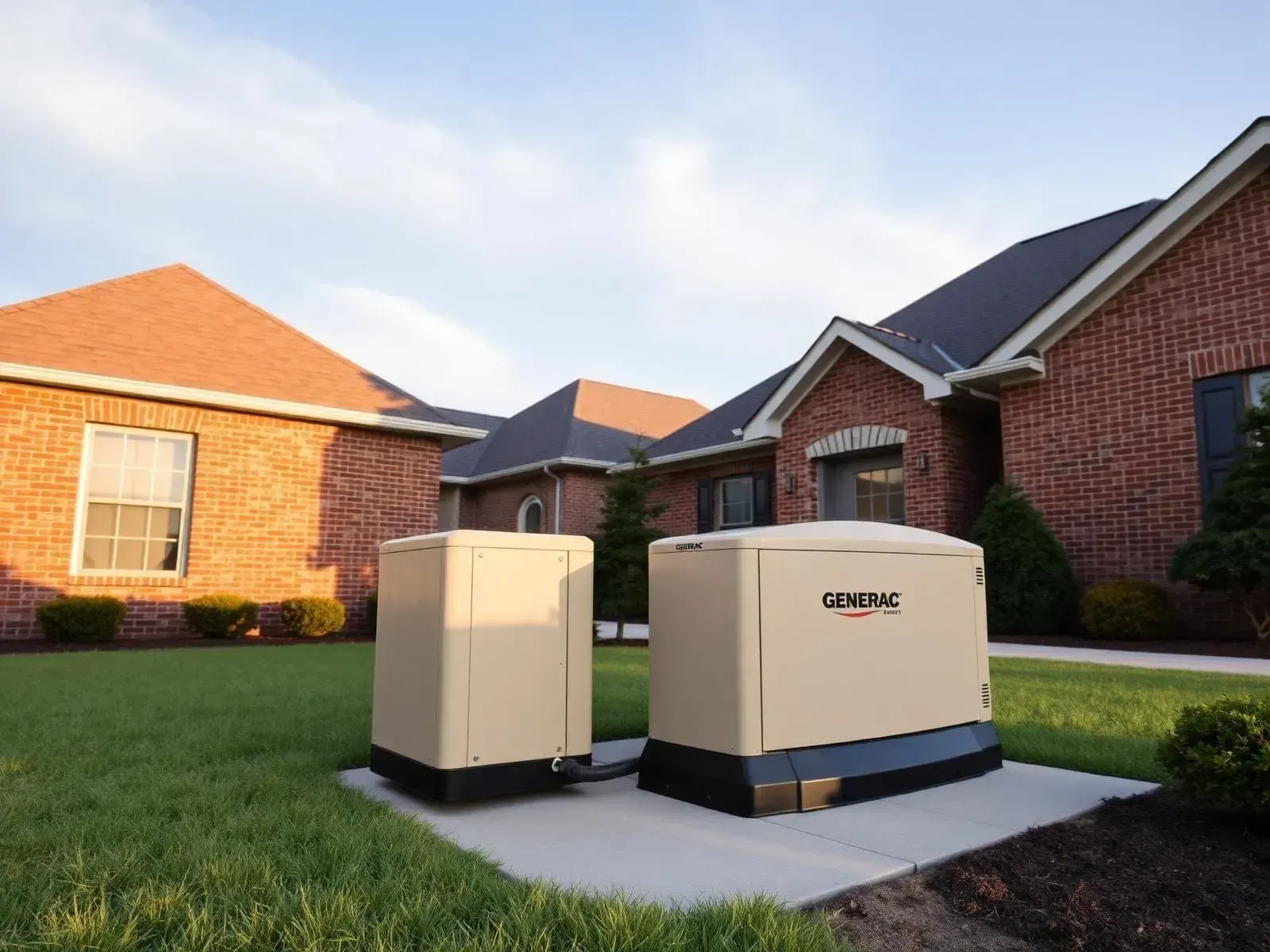
For most Lexington homes with an existing natural gas line, a natural gas standby generator is the better choice. The fuel supply stays on during grid outages, you never need to schedule tank refills, and operating costs run lower per hour than propane. For rural Central Kentucky properties without gas service, propane is the reliable alternative that delivers the same backup power with a properly sized tank.
We install both natural gas and propane whole-home generators across Lexington, Nicholasville, Georgetown, and surrounding communities. Here is what you should know before choosing a fuel type.
How natural gas generators work
A natural gas standby generator connects directly to your home's gas meter. When the power goes out, the automatic transfer switch starts the generator within seconds and it draws fuel from the municipal gas line. There is no tank to monitor, no fuel deliveries to schedule, and no risk of running dry during a week-long ice storm.
In Lexington and most of Fayette County, natural gas service from Columbia Gas or LG&E is widely available. If your home already has a gas furnace, water heater, or range, adding a generator tap is straightforward.
How propane generators work
Propane standby generators draw from a dedicated tank installed on your property. The tank is filled by a local propane supplier and holds enough fuel to power your home for days or weeks depending on the tank size and generator load.
Properties in Scott, Madison, Jessamine, and other surrounding counties often lack natural gas infrastructure. Propane fills that gap and delivers the same automatic backup power. The key is sizing the tank correctly so you do not run out during extended outages.
Fuel cost comparison in Central Kentucky
Natural gas is generally the cheaper fuel to operate in the Lexington area. A 22 kW generator running at half load consumes roughly 150-200 cubic feet of natural gas per hour. The same generator on propane burns about 2-3 gallons per hour at a similar load. Over a multi-day outage, natural gas saves meaningfully on fuel costs.
- Natural gas: continuous supply, no storage tank, lower per-hour operating cost
- Propane: requires on-site tank (typically 500 gallons), higher per-hour cost, but available anywhere in Kentucky
- Both fuels: generator maintenance costs are similar regardless of fuel type
Reliability during extended outages
Natural gas lines rarely go down during storms. Even during the 2023 ice storms that knocked out power across Central Kentucky for days, gas service stayed active in most areas. That means your generator keeps running as long as needed with zero intervention.
Propane reliability depends on your tank size and fill level. A 500-gallon tank at 80% capacity gives a 22 kW generator roughly 7-10 days of run time at typical residential loads. Keep your tank above 50% during storm season and you will have plenty of fuel for most outage events.
Installation differences
Natural gas generator installation in Lexington involves running a dedicated gas line from your meter to the generator pad, installing the automatic transfer switch, and coordinating with the gas utility for a meter upgrade if needed. Most installs take one to two days.
Propane installations add the tank placement, gas line from tank to generator, and coordination with your propane supplier. Setback requirements from the property line and structures must meet Kentucky fire code. Total installation typically takes two days.
Which fuel type fits your property
The decision often comes down to one question: does your property have natural gas service?
- Natural gas available: choose natural gas for lower costs and unlimited fuel supply
- No gas service (rural Scott, Madison, Woodford counties): propane with a 500-gallon or larger tank
- Dual-fuel option: some Generac and Kohler models accept either fuel, giving flexibility if gas service becomes available later
- Large homes with multiple HVAC systems: natural gas avoids the risk of draining a propane tank during a long outage
Generator brands we install
We are authorized dealers for Generac and Honeywell standby generators in both natural gas and propane configurations. Both brands offer models from 16 kW for essential circuit backup up to 26 kW and beyond for whole-home coverage. Every unit comes with a factory warranty and our installation guarantee.
Permits and inspections in Lexington
Both natural gas and propane generator installations in Fayette County require electrical and gas permits. We handle all permit applications, schedule inspections, and coordinate with Columbia Gas or your propane provider. The process is the same for both fuel types and adds no extra time when we manage it.
Protect your investment with maintenance
Regardless of fuel type, standby generators need annual maintenance to stay reliable. Oil changes, air filter replacement, battery checks, and load testing keep your generator ready for the next storm. Our Cool & Cozy Club members get priority scheduling and maintenance reminders so nothing falls through the cracks.
Get a recommendation for your home
Not sure which fuel type is right for your property? We will assess your gas service, load requirements, and property layout during a free on-site consultation. Contact us or call 859.457.0426 to schedule. We also offer financing to make your generator investment manageable.
Frequently Asked Questions
- Is natural gas or propane better for a whole-home generator in Kentucky?
- Natural gas is better for most Lexington homes with an existing gas line because the fuel supply is virtually unlimited during outages. Propane is the better choice for rural Central Kentucky properties without natural gas service, provided you size your tank for multi-day outages.
- How much does it cost to run a natural gas generator vs. propane?
- Natural gas typically costs less per hour to run than propane in Central Kentucky, and it never needs a tank refill. Propane makes sense for homes without a gas line. Your actual cost depends on generator size, load, and current fuel rates.
- Can you convert a propane generator to natural gas?
- Some standby generators are dual-fuel capable and can be factory-configured for either natural gas or propane. Converting a single-fuel unit after installation is not recommended and may void the warranty. Choose your fuel type before purchasing.
- What size propane tank do I need for a whole-home generator?
- A 500-gallon propane tank is the standard recommendation for a whole-home generator in Central Kentucky. This provides roughly 7-10 days of moderate use during an extended outage, depending on generator size and load.
Get a free generator estimate in Lexington
Licensed, veteran-owned technicians serving Lexington and Central Kentucky — free estimates, no pressure.
Learn moreHave questions about your home?
Talk to a licensed Lexington technician — no pressure, just answers.