
What Is HVAC Zoning and Should Your Lexington Home Have It?
HVAC zoning explained for Lexington, KY homeowners. Learn how zone dampers and multiple thermostats eliminate hot and cold spots in Central Kentucky homes.
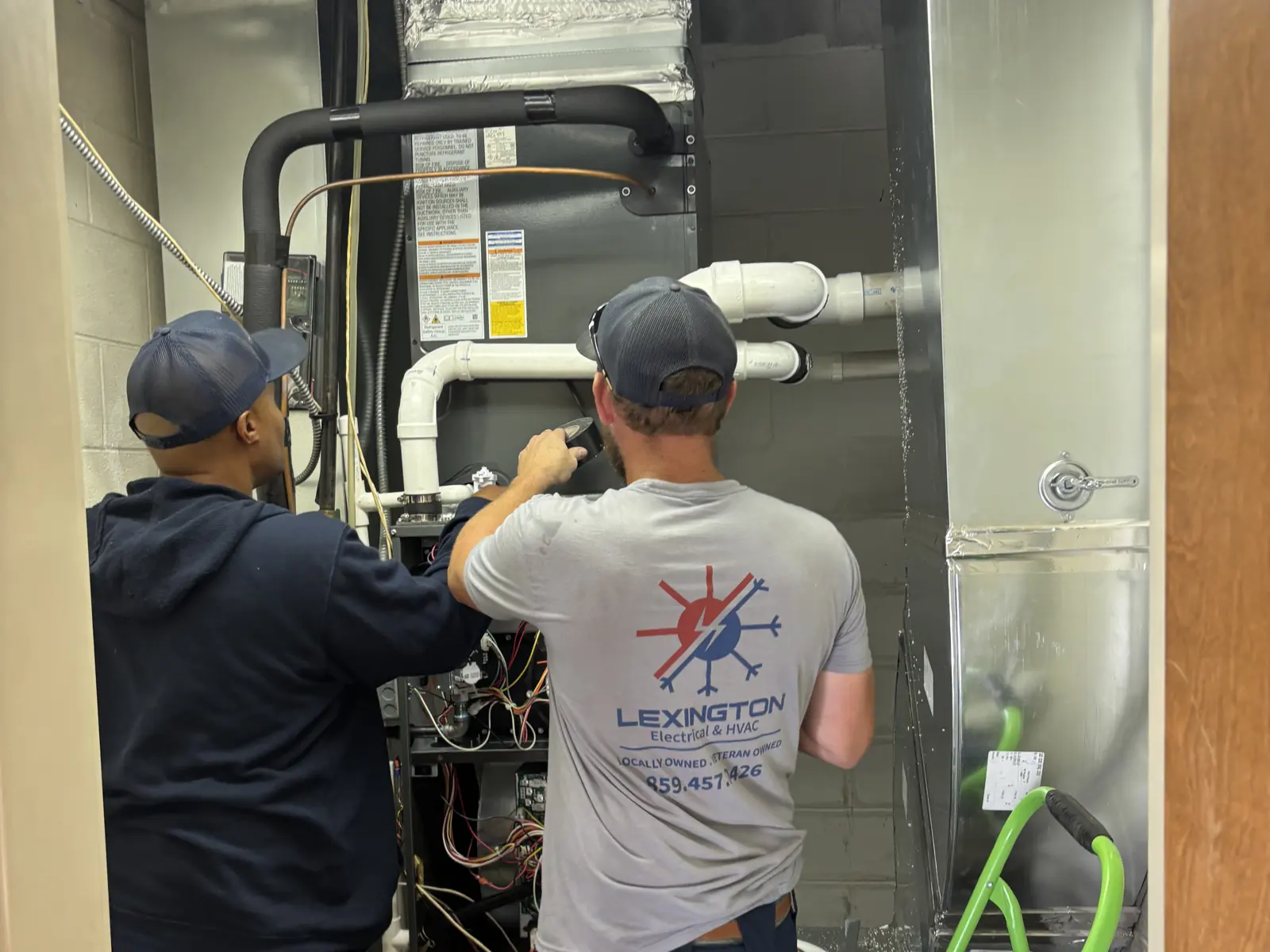
HVAC zoning divides your home into separate temperature areas, each controlled by its own thermostat. Instead of heating or cooling the entire house to one temperature, zoning lets you direct conditioned air only where it is needed. For Lexington homeowners dealing with a second floor that is always too hot or a basement that stays cold, zoning solves the problem at the source rather than forcing your system to overwork.
Our HVAC team installs and retrofits zoning systems across Fayette County and Central Kentucky.
How HVAC zoning works
A zoned system uses motorized dampers installed inside your ductwork. Each damper opens or closes based on signals from its zone thermostat. A central zone control panel coordinates the dampers with your furnace or air handler, telling the system when and where to deliver air. The result is independent temperature control for each area of your home.
Why Lexington homes need zoning more than most
Central Kentucky has hot, humid summers and cold winters. That wide temperature swing puts serious demands on a single-zone system. Lexington's housing stock adds to the challenge. Many homes in Hartland, Hamburg, and Beaumont have two-story floor plans with bonus rooms above the garage. Those bonus rooms sit directly under the roof with sun exposure on three sides, and they are the farthest point from the air handler.
Without zoning, you have two choices: overcool the main level to get the upstairs comfortable, or accept that the bonus room will always be five to ten degrees warmer. Zoning eliminates that trade-off.
Homes that benefit most from zoning
Not every home needs zoning, but these situations make it a strong investment in Central Kentucky:
- Two-story and three-story homes where the upper floors run hot in summer
- Ranch homes with finished basements that stay too cold year-round
- Homes with bonus rooms, sunrooms, or additions on long duct runs
- Houses with large window walls facing south or west
- Multi-generational homes where family members prefer different temperatures
Zoning vs. a second HVAC system
Some Lexington builders install two separate HVAC systems in larger homes, one for each floor. That works, but it doubles the equipment cost, maintenance schedule, and repair potential. Zoning achieves similar comfort control with your existing single system at a fraction of the price. For homes that already have two systems, adding zoning to each one provides even finer control.
What a retrofit installation looks like
Retrofitting zoning into an existing Lexington home takes one to two days depending on duct accessibility. The technician identifies natural zone boundaries based on your floor plan and duct layout, installs bypass or motorized dampers at trunk line junctions, wires each zone thermostat, and connects everything to a zone control panel. Your existing furnace, air handler, and condenser stay in place.
Ductwork in good condition is essential. If your ducts are undersized, have major leaks, or lack proper return air paths, those issues need to be addressed first. We inspect ductwork as part of every zoning evaluation.
Smart thermostats and zoning
Each zone gets its own thermostat, and smart thermostats like the Ecobee or Honeywell T-series work well with zoned systems. You can set schedules per zone, so the upstairs bedrooms cool down before bedtime while the main floor stays warmer during evening hours. Remote sensors extend smart thermostat accuracy into rooms far from the thermostat itself.
Energy savings with zoning
Zoning reduces energy waste by conditioning only occupied areas. If no one uses the upstairs during the day, that zone can be set back to a higher temperature in summer or lower in winter. The Department of Energy notes that setback strategies can reduce heating and cooling costs, and zoning automates that process for every zone in your home.
Pairing zoning with a Cool & Cozy Club membership keeps dampers, thermostats, and your HVAC equipment tuned up so the system delivers those savings season after season.
Cost and financing
Adding zoning during a new HVAC installation is less expensive because the installer can position dampers and thermostats before closing up the ductwork.
We offer financing options that let you spread the cost of zoning into monthly payments alongside a new system or as a standalone upgrade.
Is zoning right for your home?
If you have rooms that are consistently too hot or too cold despite a working HVAC system, zoning is likely the most cost-effective fix. It addresses the root cause, which is uneven air distribution, rather than masking it with space heaters or portable AC units.
Contact us to schedule a zoning evaluation. We will assess your ductwork, floor plan, and comfort goals and let you know whether zoning, a ductless mini-split, or another approach is the best fit for your Lexington home.
Frequently Asked Questions
- How much does HVAC zoning cost in Lexington, KY?
- Zoning cost depends on the number of zones, damper locations, and how accessible your ductwork is. Adding zones during a new system installation costs less than retrofitting an existing system. We quote after inspecting your ductwork.
- Is HVAC zoning worth it for a two-story home in Kentucky?
- Two-story homes in Kentucky benefit the most from zoning because heat rises and the second floor is almost always warmer than the first. A zoned system lets you cool the upstairs independently without overcooling the main level, improving comfort and reducing energy waste.
- Can you add zoning to an existing HVAC system?
- Yes, zoning can be retrofitted to most existing forced-air HVAC systems. A technician installs motorized dampers inside the ductwork and adds a separate thermostat for each zone. The existing furnace or air handler needs to be compatible with a zone control board.
- How many zones does a typical Lexington home need?
- Most Lexington homes do well with two or three zones. A common setup puts the main floor on one zone and the upstairs bedrooms on another. Homes with finished basements or large bonus rooms often benefit from a third zone.
Schedule an HVAC consultation in Lexington
Licensed, veteran-owned technicians serving Lexington and Central Kentucky — free estimates, no pressure.
Learn moreHave questions about your home?
Talk to a licensed Lexington technician — no pressure, just answers.

